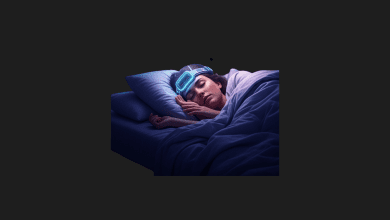
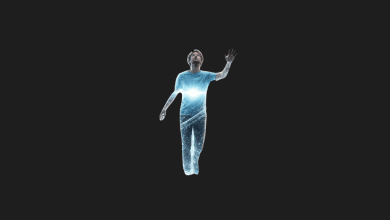
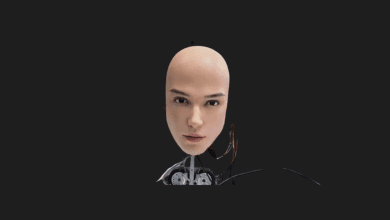
Are We Living in a Simulation? The Theory That Shakes Reality


For as long as humans have existed, we’ve wondered: What is reality? From ancient philosophers to modern scientists, the question of whether the universe is truly “real” or just an illusion has fascinated minds across history. Today, this age-old mystery has evolved into one of the boldest scientific ideas of our time — the Simulation Hypothesis.
The Core Idea

The hypothesis suggests that our entire universe could be an advanced computer simulation. Everything you see, feel, and experience — from the stars above to the emotions you carry — might be nothing more than digital information running on a vast system created by a far more advanced civilization.
It’s like imagining life as a hyper-realistic video game, with humans playing the role of unaware characters.
Why Scientists Take It Seriously

At first, this may sound like pure science fiction. But several scientific and philosophical arguments have given the theory credibility:
- Nick Bostrom’s Argument (2003)
The Oxford philosopher proposed a famous trilemma:- Almost all civilizations go extinct before reaching technological maturity.
- Advanced civilizations have no interest in creating ancestor simulations.
- If they do, the number of simulated realities will vastly outnumber base reality.
- Elon Musk’s Statement
Musk said the odds that we’re in base reality are “one in billions.” His reasoning: video games and virtual worlds have advanced incredibly in just 50 years. If technology continues at this pace for thousands of years, future civilizations could build simulations indistinguishable from real life. - Physics as Code
Some scientists argue that our universe behaves suspiciously like a programmed system. The laws of physics are consistent, precise, and mathematical — much like rules written in code. Quantum mechanics, with its strange “pixelated” structure of reality, even resembles computer resolution.
Clues That Support the Theory

- The Pixelated Universe: Some researchers suggest that spacetime itself may be “discrete,” like pixels on a screen, rather than infinitely smooth.
- Cosmic Rays Evidence: Experiments with ultra-high-energy cosmic rays could one day reveal whether the universe has a built-in computational grid.
- Mathematical Foundations: The fact that the universe can be described almost entirely with mathematics raises the question: is math the language of nature, or the programming language of our simulation?
The Possibility of Scientific Proof
While no conclusive evidence exists yet, multiple scientific teams are trying to test the idea. Some propose looking for computational glitches in the fabric of the universe — anomalies that could reveal “errors” in the simulation. Others suggest that future advances in physics, like quantum computing, may allow us to probe deeper into reality’s foundations.
What It Would Mean for Humanity
If the Simulation Hypothesis is true, the consequences are profound:


- Free Will: Are our choices truly ours, or are they lines of code?
- Purpose of Life: Could we be part of an experiment, a study, or even entertainment for our simulators?
- Afterlife: Is death simply logging out of one reality and perhaps entering another?
Should We Want to Know?
This question divides thinkers. Some argue that knowing would free humanity to explore deeper truths. Others believe it could destabilize society — if reality is “fake,” would morality and meaning collapse?
Regardless, the Simulation Hypothesis is more than just philosophy. It forces us to confront the limits of science, technology, and human imagination. And whether or not we’re inside a simulation, the fact that this discussion exists proves just how strange and fascinating reality really is.
👉 So, what do you think? If tomorrow science proved we live inside a simulation, would you want to know — or would you rather keep living in the illusion?
You Might Also Like;